
"

3.2 The Beginning of Theories & Models of Reflective Practice – John Dewey

A winding road through the hills on a sunny day.
Photo by Matt Howard, Unsplash License.

“We do not learn from experience. We learn from reflecting on experience.” John Dewey (1933)

The fundamental theories and models of reflection and reflective practice were initially born from the work of Dewey and Schön. A century ago, John Dewey emphasized the importance of involving the learner in reflection. He believed that our experiences shape us, and when reflective practice is part of learning, meaning and relevance are created, which initiates growth and change (Dewey, 1933).
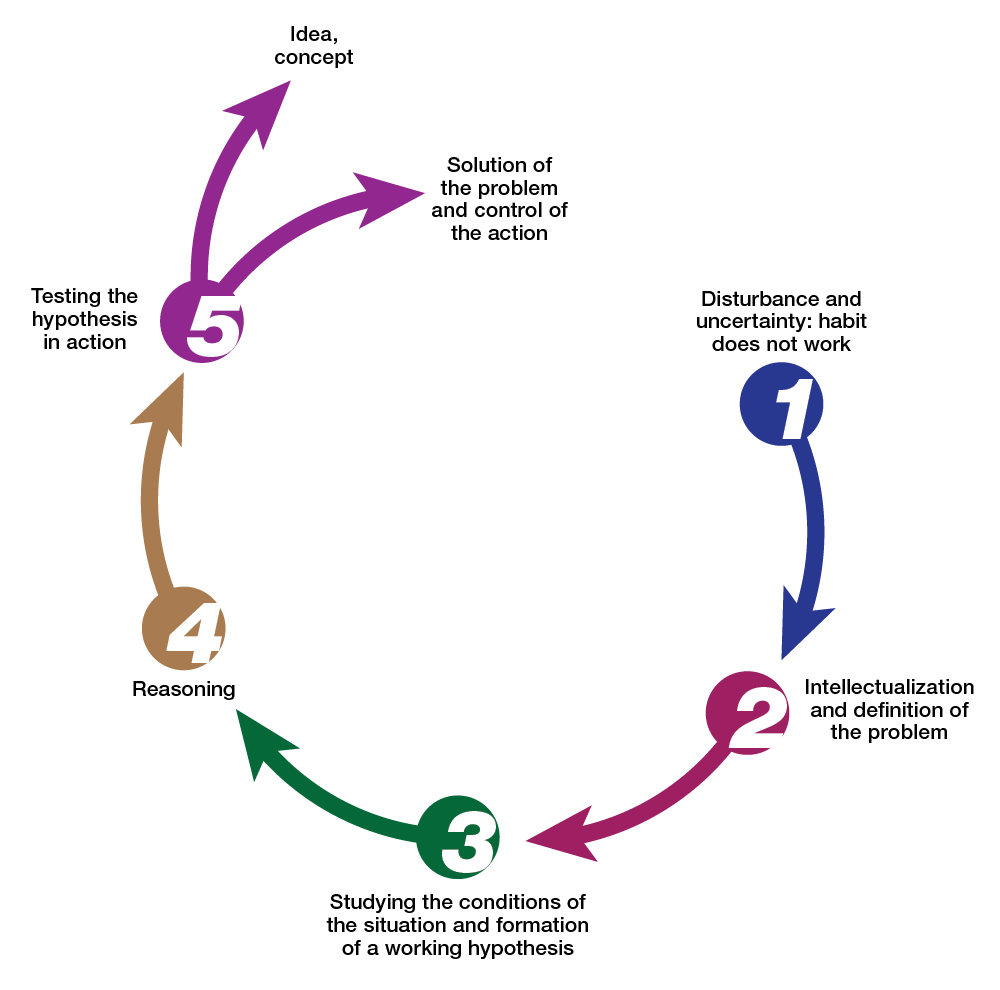
Circular diagram illustrating the stages of the experiential learning process.
Dewey’s Learner in Reflection by Fanshawe College CC BY-NC-SA 4.0 (click to enlarge)
Text Description

The Concept of Experiential Learning starts with disturbance or uncertainty then to definition of the problem then to formulation of a thesis to reasoning and testing and lastly idea concept.

Video: John Dewey

Learn more about John Dewey’s theories on education and learning by watching this video below.

Video: “John Dewey’s Theories on Education and Learning: An Introduction to His Life and Work, a preview” by Davidson Films, Inc. [3:57] is licensed under the Standard YouTube License.Transcript and closed captions available on YouTube.

License

Icon for the Creative Commons Attribution-NonCommercial-ShareAlike 4.0 International License

Reflective Practice in Early Years Education Copyright © 2022 by Sheryl Third, RECE; ECE.C, B.A., M.A is licensed under a Creative Commons Attribution-NonCommercial-ShareAlike 4.0 International License, except where otherwise noted.