
Chapter 2: The Writing Process 1: Preparing
Learning Objectives
- Distinguish between general and specific purposes for writing.
- Analyze primary and secondary audiences using common profiling techniques
- Identify techniques for adjusting writing style according to audience size, position relative to you, knowledge of your topic, and demographic.
- Distinguish between communication channels to determine which is most appropriate for particular situations.
- ENL1813 Course Learning Requirement 1: Plan, write, revise, and edit short documents and messages that are organized, complete, and tailored to specific audiences.
- Identify your audience and purpose for writing (ENL1813GHIMPST CLR 1.1)
- Anticipate audience expectations (ENL1813R CLR 5.1)
- Use pre-writing strategies to generate ideas, as well as select and limit a topic (ENL1813GMPS CLR 1.2)
- Write with an understanding of the audience, purpose, and appropriate format for the task (ENL1813A CLR 1.1)
- Select appropriate channels for delivering messages (ENL1813HIT CLR 1.2)
- Incorporate elements of business writing style (ENL1813B CLR 1.4)
- ENL1813 Course Learning Requirement 7: Select and use common, basic information technology tools to support communication.
- Identify common technology tools used to support communication (ENL1813ABHMRST CLR 7.1)
- Identify the strengths and drawbacks of various communication technologies (ENL1813GP CLR 7.2)
- Select the technology appropriate for the task (ENL1813BGHMPRST CLR 7.2/3)
Like communication in general, good writing comes from following a process. Between an author hatching an idea and the audience reading and understanding that idea, the writing process enables the author to craft messages in a time-efficient manner that ultimately meets the needs of the audience. Without following a four-stage process from (1) preparing to (2) information gathering, to (3) drafting, to (4) editing through to sending the message (see Fig. 2 below), an author can waste plenty of their own time writing what doesn’t need to be written and wasting the reader’s time by confusing them with a message that doesn’t meet their needs. The next four chapters deal with each of these four writing stages, dividing them into several steps that, when followed as a matter of habit, can save you time by helping you write no more or less than you need to in achieving your professional communication goals.
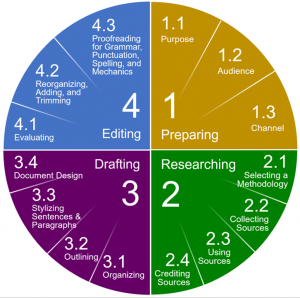
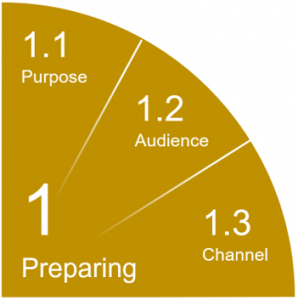
Figure 2: The four-stage writing process and Stage 1 breakdown
- 2.1: Knowing Your Purpose for Writing
- 2.2: Analyzing Your Audience
- 2.3: Selecting Appropriate Channels